Lumen Vietnam Fund

Blog

Singapore leads FDI in HCMC: Where is the $24 bln-plus investment flowing?

Singapore leads FDI in HCMC: Where is the $24 bln-plus investment flowing?

Singapore remains the largest foreign investor in Ho Chi Minh City, with total registered capital exceeding $24 billion. Beyond real estate, industrial parks and banking, Singaporean investment is increasingly moving into high-tech, innovation, data infrastructure and other high-value-added sectors.

The information was provided by Nguyen Loc Ha, Standing Vice Chairman of the Ho Chi Minh City People's Committee, at a ceremony marking the 61st National Day of Singapore (August 9, 1965 - August 9, 2026), organized by the Consulate General of Singapore in the city.

According to Ha, cooperation between Ho Chi Minh City and Singapore has become a bright spot in the city's overall external relations in recent years.

Singapore is currently the largest foreign investor in HCMC, with total registered capital exceeding $24 billion. While maintaining a presence in traditional sectors, Singaporean businesses are expanding into science-technology, innovation, digital transformation, logistics and the development of Vietnam International Financial Center.

The shift is becoming increasingly evident through new projects in finance, data centers, and high-tech research and manufacturing.

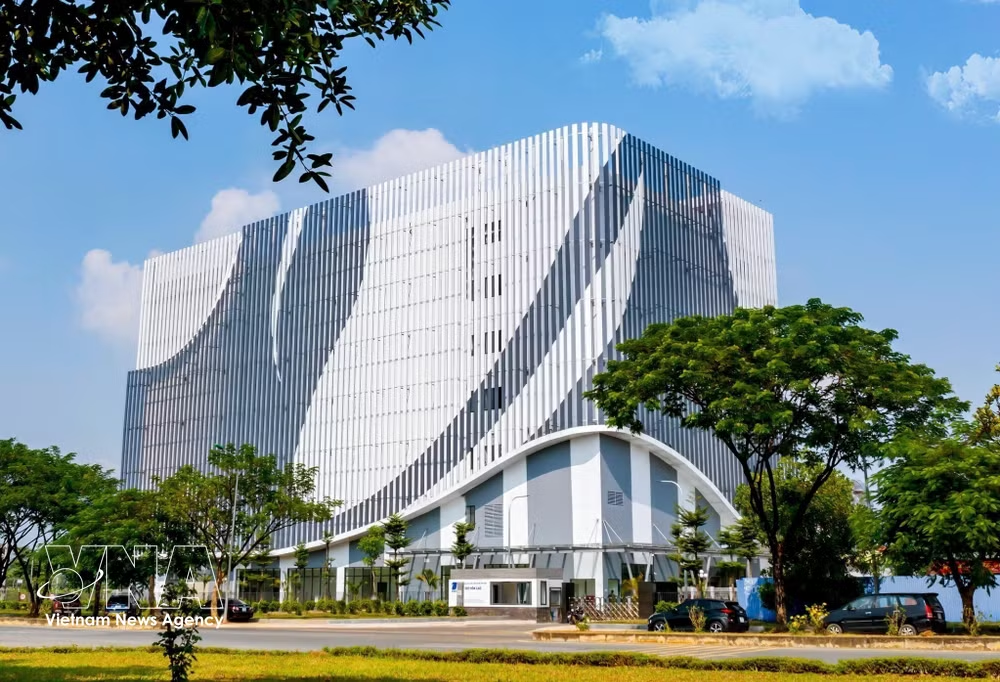
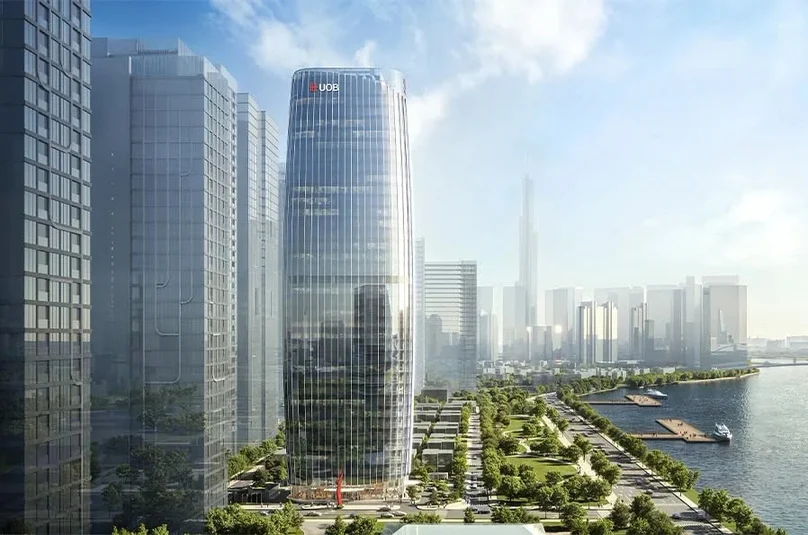
On July 1, UOB broke ground on UOB Plaza in HCMC, with total investment of about $450 million. Sembcorp, meanwhile, has been approved to invest in a large-scale, AI-ready data center campus in the city's High-Tech Park.

Another area of cooperation is emerging through a partnership between A*STAR and Becamex to establish the Vietnam Advanced Manufacturing Research Center.

These projects show that cooperation between HCMC and Singaporean partners is expanding from traditional investment areas into sectors with greater technological content and higher added value.

From VSIP to data, AI and finance

While technology, data and financial projects represent a new wave of investment, the Vietnam-Singapore Industrial Park (VSIP) remains one of the longest-standing symbols of Vietnam-Singapore investment cooperation.

Ha said that from a single industrial park in Binh Duong 30 years ago, the VSIP model has expanded across Vietnam and become a symbol of strategic trust, long-term vision and effective cooperation between the two countries.

In HCMC, Singaporean capital is also present in a number of large-scale real estate, urban complex and commercial projects.

Empire City in Thu Thiem has total registered investment of about $1.2 billion. Saigon Centre in the former District 1 has been developed in several phases, with total investment estimated at hundreds of millions of dollars.

In the former District 7, SC VivoCity shopping center has investment capital of about $100 million. It is part of the 4.4-hectare Saigon South Place Complex developed by Mapletree, with total investment of about $360 million.

CapitaLand is also among the major Singaporean investors in HCMC's real estate market, with projects including Feliz en Vista, Vista Verde and De La Sol.

In the technology sector, OneHub Saigon in the city's High-Tech Park is a 12-hectare office and commercial park with registered investment capital of about $130 million.

The continued arrival of projects such as UOB Plaza and Sembcorp's data center campus suggests a new wave of Singaporean investment is taking shape alongside the real estate and industrial park projects that have established a strong presence over the years.

Singapore Consul General in HCMC Pang Te Cheng said cooperation between the two countries has entered a new phase since Vietnam and Singapore upgraded their ties to a comprehensive strategic partnership, expanding beyond trade and investment into the digital economy, innovation, green energy, new technologies, and human resource development.

For HCMC, cooperation with Singapore is increasingly focused on sectors with higher added value and greater technological content.

Beyond investment and trade, the two sides also maintain cooperation in education and training. Programs covering public administration, economic reform policy, and smart urban development have contributed to human resource training for the city.

People-to-people exchanges between HCMC and Singapore are also expanding, supported by their geographic proximity and growing tourism, business and educational exchanges.

Bilateral ties enter a new phase

The foundation for expanding economic cooperation between HCMC and Singapore has been strengthened alongside the development of bilateral relations.

Vietnam and Singapore upgraded their ties to a comprehensive strategic partnership in March 2025. The state visit to Singapore by Party General Secretary and State President To Lam in May 2026 further demonstrated the commitment of the two countries' top leaders to deepening bilateral ties.

City Vice Chairman Nguyen Loc Ha said Vietnam and Singapore have built a dynamic, substantive and effective partnership in Southeast Asia.

Cooperation between Ho Chi Minh City and Singapore is therefore not only reflected in investment capital, but is expanding across technology, finance, logistics, education, human resource development and smart urban development.

Further opportunities for cooperation will also emerge from regional and international mechanisms.

Singapore will assume the ASEAN chairmanship in 2027, while Vietnam will host APEC 2027. The two sides expect priorities such as strengthening ASEAN centrality, connectivity and community building to complement APEC 2027's focus on connectivity, inclusive economic development, and resilience.

With more than $24 billion in registered capital, Singapore has established a substantial investment base in HCMC. But the more notable shift is in the direction of new capital flows, with high-tech industries, data centers, AI, finance, and advanced research and manufacturing becoming increasingly prominent in bilateral cooperation.


Source: Vu Pham, Thai Ha

Photo: Photo courtesy of UOB
Latest Posts

Qualcomm aims to make Vietnam its third-largest global AI R&D hub

Qualcomm aims to make Vietnam its third-largest global AI R&D hub

During a meeting with Vietnam's top leader, President and CEO of Qualcomm affirmed that the Group regards Vietnam as an increasingly important market and technology hub in Asia, and aims to establish Vietnam as its third-largest AI research and development hub globally.

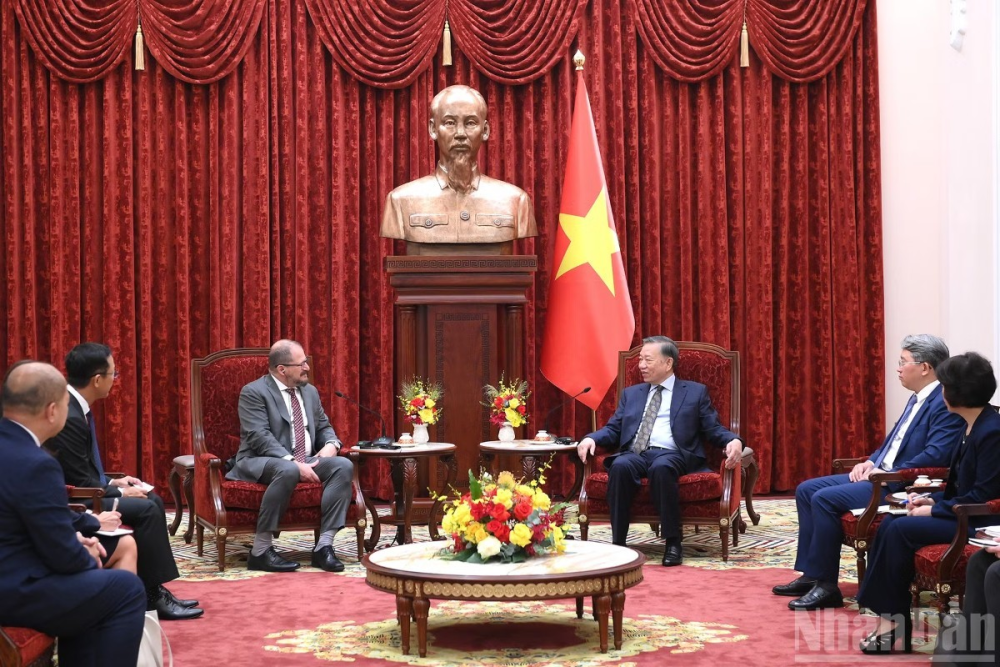
General Secretary and President To Lam has called on Qualcomm to expand its investment in artificial intelligence (AI), semiconductors, robotics, 5G/6G, and next-generation connectivity technologies during a meeting with the tech giant's top leadership.

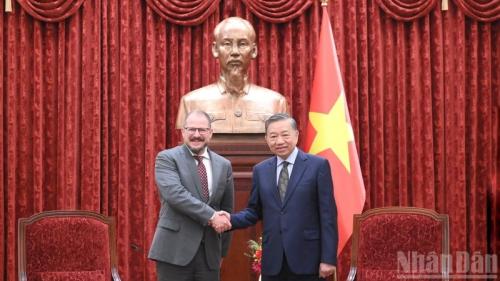
The Vietnamese top leader made the request while receiving Mr. Cristiano Amon, President and CEO of Qualcomm, on August 27 during his working visit to Vietnam.

General Secretary and President Lam emphasized that Vietnam prioritizes attracting investments that are coupled with technology transfer and the development of high-quality human resources. He reaffirmed that Vietnam will continue to create favorable conditions for leading global technology corporations, particularly those from the United States, to invest, research, and establish long-term partnerships in the country.

Acknowledging Qualcomm’s contributions over the past 20 years, the leader highly valued the Group’s expansion of its research and development (R&D) activities and its support for innovation and the growth of Vietnam’s technology ecosystem. He specifically noted the establishment of Qualcomm’s R&D center in Hanoi and its successful collaborations with major Vietnamese tech firms such as Viettel and VinSmart.

Mr. Lam welcomed Qualcomm’s strategy to position Vietnam as a high-priority location in its Asian development plan, moving toward making the country a vital R&D hub within its global network. He noted that this direction is perfectly aligned with the strengthening of cooperation in science, technology, and innovation under the Vietnam-US Comprehensive Strategic Partnership.

Furthermore, he urged Qualcomm to increase technology transfer, share management expertise, and expand cooperation with domestic enterprises, universities, and research institutes. These efforts, he noted, should focus on helping Vietnamese businesses enhance their technological capabilities and participate more deeply in global technology value chains and supply chains.

Vietnam as its third-largest AI R&D global hub

For his part, Mr. Amon stated that his visit comes at a time when Qualcomm is accelerating its strategy to develop emerging technologies, particularly AI, semiconductors, and connected computing, while simultaneously expanding its R&D footprint in Vietnam.

The Qualcomm leader highly commended Vietnam’s vision, determination, and robust policies aimed at driving growth, science and technology development, innovation, digital transformation, and the semiconductor and AI industries.

Expressing his impression of Vietnam’s recent developmental milestones, Mr. Amon remarked that these achievements demonstrate the country's growing appeal to the international business community. He added that this progress provides a solid foundation for Vietnam to emerge as an increasingly vital regional hub for high-tech manufacturing, R&D, innovation, and the digital economy.

Notably, Mr. Amon affirmed that Qualcomm regards Vietnam as an increasingly important market and technology hub in Asia. He revealed that the Group aims to establish Vietnam as its third-largest AI research and development hub globally.

With over $100 billion already invested in R&D worldwide, Qualcomm seeks to leverage its core technological capabilities, global research network, and international partner ecosystem to expand cooperation in Vietnam. Key focus areas include AI, semiconductors, 5G/6G, connected computing, and next-generation technological infrastructure.

Qualcomm also expressed its desire to strengthen coordination with Vietnamese government agencies, enterprises, research institutes, and universities. This collaboration will focus on research, high-quality human resource training, technology transfer, and the development of next-generation technologies. The Group remains committed to expanding its investment and long-term presence in Vietnam, contributing to the nation's burgeoning semiconductor, AI, and innovation ecosystems.


Mooncake orders double ahead of Vietnam's Mid-Autumn Festival

Mooncake orders double ahead of Vietnam's Mid-Autumn Festival

Mooncake orders on Shopee doubled in the two months before this year's Mid-Autumn Festival, while orders for other festival-related products rose nearly 50 percent year on year, pointing to an early start to seasonal shopping in Vietnam.

Vietnam's Mid-Autumn Festival, known locally as Tet Trung Thu, is a traditional festival held on the 15th day of the eighth month of the lunar calendar, usually falling in September or early October.

The festival is associated with family gatherings, children carrying lanterns and lion dances, while mooncakes are traditionally eaten and given as gifts to relatives, friends, and business partners.

Although the festival falls in late September this year, consumers have already begun shopping for mooncakes, lanterns, gift boxes, and other seasonal products.

According to internal data from Shopee, Mid-Autumn-related products recorded nearly one million searches in August.

Mooncakes were the most searched item, followed by lanterns, gift boxes, and baking supplies.

The strong interest has translated into higher sales, with orders for Mid-Autumn-festival-related products rising nearly 50 percent from the same period last year.

Mooncake orders alone doubled in the two months leading up to this year's festival compared with the same period in 2025.

The figures show that consumers are preparing for the festival earlier and looking for more options, ranging from traditional mooncakes and gifts to decorations.

Brands including Mondelez Kinh Do and Lam Thuy said consumers are increasingly concerned about product quality and the overall value they receive.

As a result, brands are paying greater attention to how they present products online and how quickly they respond to changing consumer demand.

Lam Thuy turns to live streams, videos

Lam Thuy, a traditional mooncake brand that has expanded its e-commerce business in recent years, has been using Shopee's digital content tools to reach more customers.

Through live streams, the brand can showcase the appearance and characteristics of different mooncakes while answering customers' questions in real time.

Shopee Video also allows the brand to provide product information in different formats and direct users to its online store.

Ngo Thi Thuy Linh, brand director of Lam Thuy, said the company develops new mooncake designs every year to match changing tastes and attract younger consumers.

Videos and live streams are useful for introducing new products and reaching shoppers looking for new choices for the Mid-Autumn Festival, she said.

Lam Thuy has also worked with Shopee to launch promotional programs since early August.

The brand plans to increase live-streaming and promote its key products during the September 9 sales event.

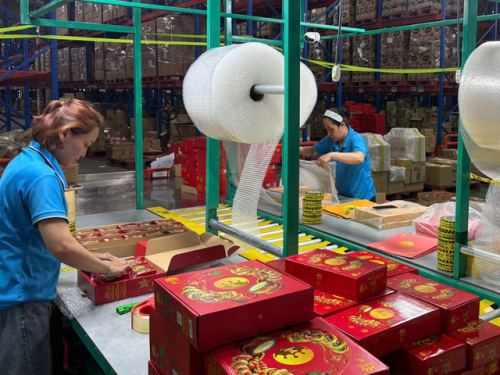
To prepare for higher demand, Lam Thuy has tripled the number of workers involved in production, packaging, and customer service.

It expects mooncake orders on Shopee during this year's Mid-Autumn season to increase around 20 percent from last year.

Kinh Do uses data to adjust product range

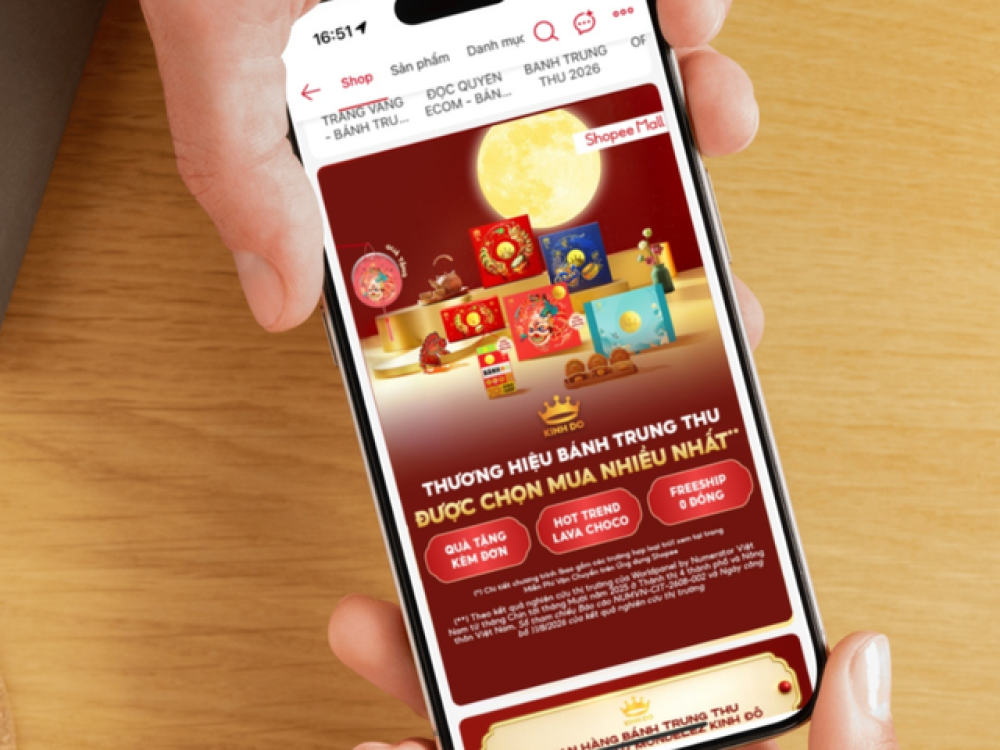
For Mondelez Kinh Do, which already has a large-scale e-commerce operation, data analysis is being used to adjust its product range, content, inventory, and resources.

Duong Uy Trong Phuc, e-commerce channel manager at Kinh Do, said the mooncake business has a short selling season, while consumer preferences for flavors, designs, and gifting purposes can change quickly.

The company therefore needs to prepare its product range early while continuously monitoring market demand, he said.

Analytics tools help Kinh Do identify products attracting consumer attention, while customer feedback and interactions through digital content provide additional insight into their preferences.

The company has introduced several new products this year, including Mini Lava and Snowy Mooncakes, as well as the four-mooncake 'Ma Dao Doan Vien' gift box and the two-mooncake 'Trang Slay' box.

The new products are aimed at offering more choices and attracting younger consumers.

Kinh Do also plans to increase activities on Shopee Live and Shopee Video during the September 9 sales event.

The experiences of Lam Thuy and Kinh Do show how brands are using e-commerce differently.

However, both brands are moving to identify consumer demand earlier and prepare their products and sales strategies ahead of the peak Mid-Autumn shopping season.

Vietnam’s data centre race draws multibillion-dollar investment

Vietnam’s data centre race draws multibillion-dollar investment

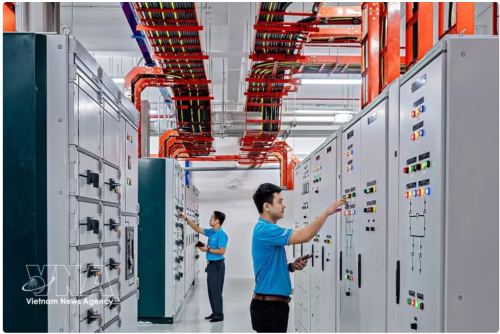
Ho Chi Minh City currently has 20 operational data centres and nine proposed projects, according to the municipal Department of Science and Technology. New projects are moving beyond traditional data centres toward large complexes integrating AI and other digital infrastructure.

Hanoi (VNA)– Vietnam’s data centre market is entering a new phase as a wave of large-scale projects worth billions of US dollars is being proposed and rolled out, driven by rising demand for artificial intelligence (AI), cloud computing and large-scale data processing.

Ho Chi Minh City currently has 20 operational data centres and nine proposed projects, according to the municipal Department of Science and Technology. New projects are moving beyond traditional data centres toward large complexes integrating AI and other digital infrastructure.

Among the most notable is the SGI-HCM Campus data centre and AI complex at Tan Phu Trung Industrial Park, invested in by Kinh Bac City Development Holding Corporation (KBC) in partnership with Accelerated Infrastructure Capital (AIC) and VietinBank. The project has an estimated investment of about 2.1 billion USD and received its investment registration certificate on July 21.

Another major proposal is a 2-billion-USD AI super data centre by UAE-based G42, Microsoft, FPT Corporation, Viet Thai Group and VinaCapital. The project is expected to contribute to economic growth and strengthen Vietnam’s appeal to foreign investors.

In late July, Ho Chi Minh City authorities and an inter-agency working group met with G42, Microsoft and other investors to discuss the Trusted Data Agreement and related legal issues. Investors are continuing to refine the project and study potential locations.

Several other large projects are also being carried out or proposed at the Saigon Hi-Tech Park, including those involving BW Industrial Development, Warburg Pincus and Digital Realty; Sembcorp-BB Holding; NTT Global Data Centers; and CMC Corporation. Their investment values range from 250 million USD to 850 million USD.

The surge comes as demand for data infrastructure grows rapidly. Savills Vietnam forecasts that the country’s data center capacity could reach around 950 MW by 2030, up from about 524.7 MW in 2025. Market revenue is projected to exceed 3 billion USD by 2031, with annual growth of more than 20%.

John Campbell, Director of Industrial Services at Savills Vietnam, said Vietnam was at the beginning of a significant data centre development cycle. He noted that demand had existed for years, supported by the country’s young population, high technology adoption and rapid digitalisation.

Large cloud service providers have also been showing interest in Vietnam for the past four to five years, indicating that demand is not new but that the market is becoming increasingly ready for faster growth.

Regulatory changes are providing additional momentum. Since 2025, foreign investors have been allowed to own 100% of companies providing data centre services, removing one of the barriers that previously limited international investment in the sector.

The race is about more than land

Unlike conventional industrial real estate, where land, location and infrastructure access are key considerations, data centres require a much more complex combination of conditions.

Power supply is the most critical factor. Large data centres consume huge amounts of electricity and require a stable, uninterrupted supply, with sufficient backup capacity and an increasing focus on clean energy.

Andrew Green, Head of Data Centre Group, Asia Pacific at Cushman & Wakefield, said data centre development was shifting from locations with good connectivity to markets capable of supplying electricity on a large scale. This trend is creating new growth corridors and pushing investment beyond traditional data centre hubs.

Data connectivity is another essential factor. Large data centres need reliable international Internet connections, particularly submarine cables and stable landing stations. As cloud computing, AI and cross-border data services expand, connectivity is becoming an increasingly important part of a data centre’s value.

This is encouraging projects to cluster around areas where different layers of infrastructure converge, including hi-tech and industrial parks, logistics hubs and major cities.

Data regulations and information security are also becoming increasingly important. According to Savills, tighter personal data protection rules are likely to encourage businesses to store and process more data in Vietnam, increasing demand for facilities that meet international standards.

For banks, financial institutions and government agencies, requirements are even higher, with data centres needing advanced information security standards. As a result, the value of a data centre cannot be measured simply by land area or power capacity, but also by its security, reliability and operating standards.

Savills Vietnam said improvements in the legal framework and progress in resolving land, approval and project implementation issues at hi-tech parks were creating tangible changes in the market.

From a real estate perspective, data centers are emerging as a distinct segment from factories and logistics warehouses. They require large capital investment, lengthy preparation and strict technical assessments. Land leases of 10-30 years are becoming common as investors seek long-term stability for assets with long operating lives.

This is also creating opportunities for industrial property developers. Rather than simply providing land, developers need to offer integrated infrastructure covering electricity, connectivity, security, cooling, telecommunications and long-term capacity expansion.

See all blog