Lumen Vietnam Fund

Blog

HCMC to use prime land assets worth $889 mln to pay Masterise for two major bridge projects

HCMC to use prime land assets worth $889 mln to pay Masterise for two major bridge projects

Ho Chi Minh City will use prime land assets worth more than VND23.4 trillion ($889.4 million) and public funds to compensate Masterise for two major bridge projects under build-transfer (BT) contracts, according to a new decision by the city People's Council.

The council approved adjustments to the investment policies for the Can Gio bridge and Phu My 2 bridge projects, both of which are being developed by the local developer under public-private partnership (PPP) arrangements.

For the Can Gio bridge project, authorities revised the payment structure after changes to the land bank earmarked for investor compensation. The city will now allocate two downtown land plots with a combined estimated value of more than VND7.5 trillion ($285.06 million) and use budget funds to cover the remainder of the payment obligation.

The sites include a property at 8-12 Le Duan boulevard, valued at VND3.42 trillion ($130 million), and another at 2-4-6 Hai Ba Trung street, valued at around VND4.11 trillion ($156.21 million).

The land assets account for roughly 69.7% of the BT contract value for the bridge construction, estimated at VND10.82 trillion ($411.25 million). The remaining VND3.74 trillion ($142.15 million) will be paid from the local budget after the land transfer is completed.

The Can Gio bridge project has a revised total investment of about VND13.35 trillion ($507.41 million), including interest expenses during construction, up by VND148 billion ($5.63 million) from the previously approved plan.

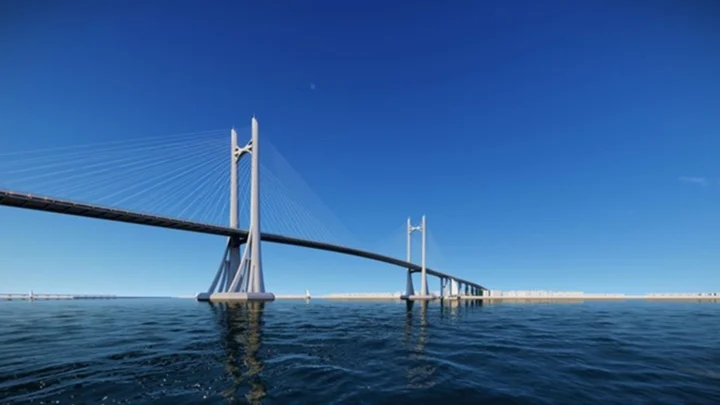
The bridge will span across the Soai Rap river, linking Can Gio with Nha Be communes and replacing the Binh Khanh ferry crossing. The project includes a bridge section of about three kilometers and connecting roads, bringing the total length to roughly seven kilometers.

Separately, the city approved adjustments to the Phu My 2 bridge project, for which land assets valued at approximately VND15.91 trillion ($604.72 million) are expected to be used as payment to the investor.
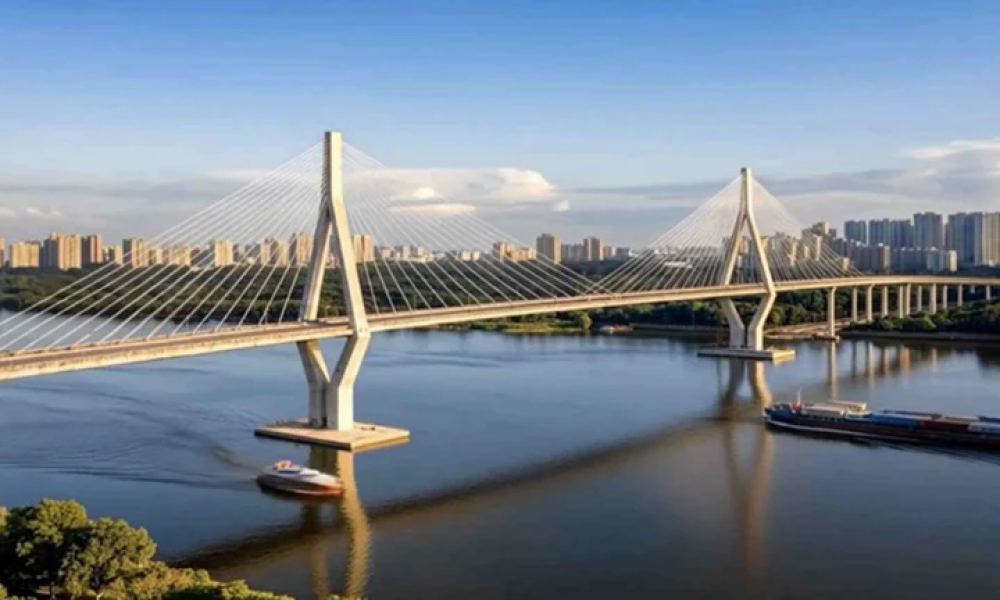
The bridge will connect Nguyen Huu Tho road in HCMC with Lien Cang road in the neighboring industrial city of Dong Nai. The route will stretch about 6.64 km, including 4.6 km within HCMC and 2.04 km in Dong Nai.

Designed with eight traffic lanes and supporting infrastructure, the project carries a total investment of about VND21.83 trillion ($829.73 million), including financing costs during construction. Completion is targeted for 2029.

Authorities view Phu My 2 as a strategic transport link that will strengthen connections between southern HCMC, Dong Nai's Nhon Trach commune, and Long Thanh International Airport.

Once completed, the bridge is expected to ease congestion on the existing Phu My bridge, National Highways 1 and 51, and the Ho Chi Minh City-Long Thanh expressway, while improving logistics efficiency and supporting economic activity across the southern key economic region.

Source: Hai Yen

Photo: Photo courtesy of Masterise
Latest Posts

Ho Chi Minh City launches eight key projects worth US$9.6 bln

Ho Chi Minh City launches eight key projects worth US$9.6 bln

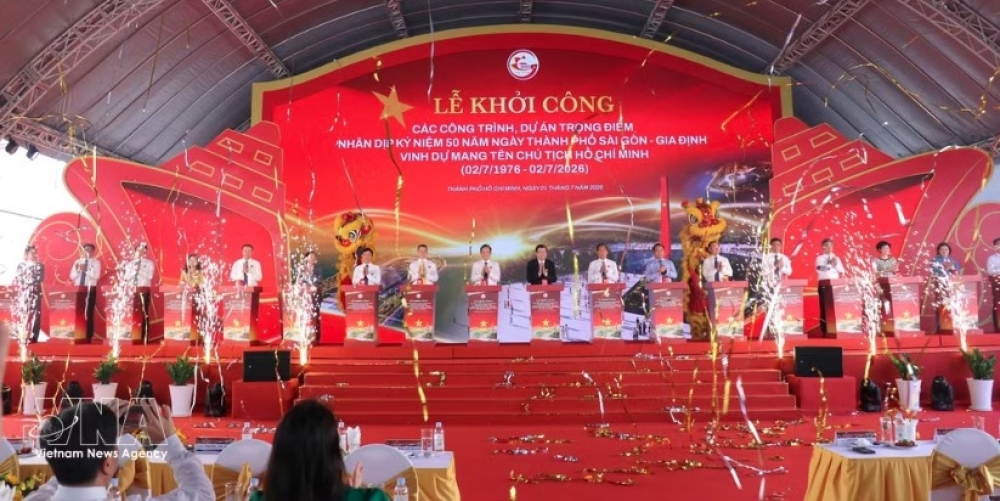
Ho Chi Minh City on July 1 simultaneously broke ground on eight major infrastructure projects worth more than VND253 trillion (US$9.6 billion) to mark the 50th anniversary of Saigon-Gia Dinh officially being named after President Ho Chi Minh (July 2, 1976–2026).

The projects are the Nha Rong Wharf–Khanh Hoi Cultural Park and Bach Dang Riverside Green Space; the Ho Tram–Long Thanh International Airport Urban Expressway; the Can Gio–Vung Tau Sea-Crossing Route; the Cai Mep Ha General and Container Port (Phase 1); the Binh Tien Bridge and Road project, the Ho Chi Minh City–Moc Bai Expressway (Phase 1), the interchange of the Ben Luc–Long Thanh Expressway and Rung Sac Road; and the interchange of the Ben Luc–Long Thanh Expressway and National Highway 50.

Speaking at the ground-breaking ceremony, Vice Chairman of the municipal People's Committee Hoang Nguyen Dinh described the event as more than the start of major construction works.

It is a pledge in action, demonstrating the city's determination to enter a new stage of development and meet the expectations of the nation, he said.

According to Dinh, the projects will improve regional connectivity, expand urban development space and strengthen the city's competitiveness.

Among them, the Nha Rong Wharf–Khanh Hoi Cultural Park and Bach Dang Riverside Green Space project holds particular historical significance. Covering more than 73 hectares, the site is where President Ho Chi Minh departed in 1911 to seek a path for national salvation.

The area is expected to become a major cultural, historical and tourism destination while improving traffic along the Saigon River.

Dinh urged relevant agencies to accelerate administrative procedures, site clearance and construction material supplies, while calling on investors and contractors to apply modern technologies, ensure construction quality and safety, and prevent losses throughout project implementation.

Dang Minh Truong, chairman of Sun Group, said developing the Nha Rong Wharf–Khanh Hoi project is both an honour and a historic responsibility.

He noted that the company aims to preserve and promote the area's heritage rather than replace it with new landmarks.

Meanwhile, Vingroup Deputy General Director Tran Van Anh, representing the consortium that is developing the Can Gio–Vung Tau Sea-Crossing Route, stressed the company would mobilise its financial, technological and human resources for the project.

She added that the route would significantly shorten travel time between Can Gio and Vung Tau, promoting trade, tourism and the region's marine economy.

According to the municipal People's Committee, the projects are financed through a combination of public investment, public-private partnerships (PPP) and private capital, reflecting the Government's policy of promoting private sector development.

The city expects the projects to unlock new development opportunities following its expanded administrative boundaries, strengthen regional connectivity, boost the marine economy, logistics, tourism and services, and reinforce Ho Chi Minh City's role as Vietnam's leading economic centre.

Dong Nai seeks to pioneer pilot nuclear power plant using small modular reactors

Dong Nai seeks to pioneer pilot nuclear power plant using small modular reactors

Looking toward 2050, the southern city aspires to lead the country in high-tech industries, evolving into a premier center for nuclear research, training, and application in both Vietnam and the broader region.

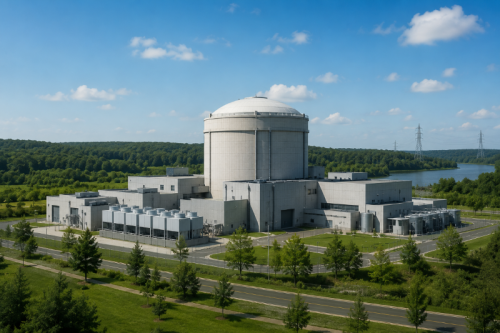
Dong Nai City in southern Vietnam has set a strategic goal to become the pioneering locality selected by the Central Government to pilot a nuclear power plant using Small Modular Reactor (SMR) technology by 2035.

In implementation of the Prime Minister’s Decision No. 438/QD-TTg regarding the strategy for the development and application of atomic energy for peaceful purposes through 2035, with a vision to 2050, the City People's Committee has issued a comprehensive plan to execute this strategy locally.

By 2030, the city aims to complete and safely operate the Nuclear Science and Technology Research Center in Hang Gon, ensuring synchronized infrastructure such as transportation, electricity, and water to support the project.

Following this, by 2035, Dong Nai intends to have all environmental radiation monitoring stations under its management fully operational. These stations will be integrated into the National Digital Platform and the city’s Intelligent Operations Center (IOC), utilizing Artificial Intelligence (AI) for data analysis and early pollution warnings, as the locality strives to be designated as the nation's pilot site for SMR technology.

Looking toward 2050, Dong Nai aspires to lead the country in high-tech industries, evolving into a premier center for nuclear research, training, and application in both Vietnam and the broader region.

The locality intends to establish itself as an integrated clean energy hub for the Southeast region through a "Hybrid Energy System" model. This system will combine SMRs with renewable energy sources—such as floating solar, biomass, and waste-to-energy—to provide a stable baseload power supply with net-zero emissions, directly serving concentrated digital technology zones and data centers.

To realize these ambitions, Dong Nai will invest in upgrading its automated environmental radiation monitoring network, linking it directly to central authorities and the provincial IOC. The city will also enhance its nuclear incident response plans to address large-scale scenarios, conducting annual drills in coordination with specialized central forces.

Furthermore, the plan includes establishing medical centers capable of specialized treatment for acute radiation syndrome and planning strict management cycles for medical and industrial radioactive waste.

To ensure a skilled workforce, the city will launch academic programs in radiation engineering, nuclear medicine, and environmental law, while upgrading laboratories and enacting policies to attract and retain top-tier talent.


Manufacturing sector ends first half of 2026 with firm growth as PMI holds above no-change mark

Manufacturing sector ends first half of 2026 with firm growth as PMI holds above no-change mark

S&P Global said growth was underpinned by further gains in new orders, which supported a 14th consecutive month of rising output.

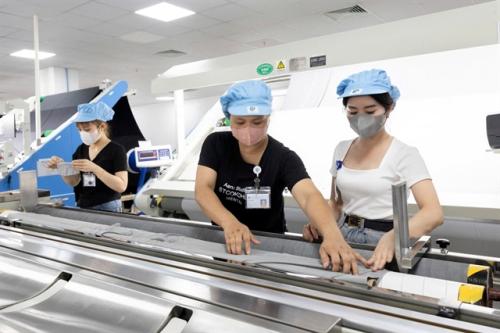
HÀ NỘI — The manufacturing sector ended the first half of 2026 on a firm footing, with sustained growth in output and new orders, even as supply-chain pressures and employment weakness persisted, according to S&P Global.

The S&P Global Vietnam Manufacturing Purchasing Managers' Index (PMI) posted 51.8 in June, down from 52.8 in May but still above the 50-point threshold, signalling a continued improvement in the health of the sector, S&P Global said in a news release on July 1.

S&P Global said growth was underpinned by further gains in new orders, which supported a 14th consecutive month of rising output. Production growth in June also accelerated to its fastest pace since February, reflecting stronger underlying demand.

“Growth was maintained in the Vietnamese manufacturing sector during June amid further improvements in new orders and an easing of inflationary pressures,” the report said, adding that purchasing activity also increased during the month.

Firms ramped up input purchases to meet rising production needs, but supply-chain delays continued to weigh on inventories, with input stocks falling sharply during the month.

Input costs continued to rise sharply in June due to material supply shortages and higher transportation costs, but the rate of inflation was much softer than that seen in May and the lowest since the start of the year.

Despite stronger activity, manufacturers reduced staffing levels again in June, highlighting continued caution over labour demand even as workloads increased.

Business confidence improved to a four-month high, supported by expectations of further gains in new orders, product development and capacity expansion. However, sentiment remained below pre-conflict levels seen before recent geopolitical tensions in the Middle East.

Andrew Harker, economics director at S&P Global Market Intelligence, said that employment trends remained a weak spot despite improving output and demand conditions.

Still, the sector entered the second half of 2026 on a positive footing, and should remain in expansion as global conditions is predicted to stabilise in the months ahead.


See all blog