Lumen Vietnam Fund

Blog

Fully utilizing resources for national competitiveness

Fully utilizing resources for national competitiveness

Energy sector institutions are increasingly the determining factor in a country’s overall competitiveness.

Against the backdrop of a global energy transition, a country’s competitive advantage is shifting from ownership of natural resources toward its ability to efficiently convert those resources into value.

Energy remains fundamental to economic growth, industrialization, national defense and security, and quality of life. But its role is being reshaped by the energy transition, net-zero targets, global supply-chain competition, and geopolitical volatility. Rapid advances in AI, large-scale data centers, and semiconductor manufacturing, together with global electrification, are also putting unprecedented pressure on energy supply and demand.

Turning resources into value

Countries must now do more than ensure sufficient energy. They must deliver competitive prices, operational flexibility, reliability, and lower emissions. For high-tech industries, reliable supply is critical. The energy transition is therefore not simply a shift from conventional to renewable sources, but a comprehensive restructuring in which oil and gas, LNG, coal, hydropower, renewables, storage, transmission, and emerging technologies must work together to ensure energy security and support sustainable growth.

For Vietnam, these demands come alongside an ambition to sustain high growth and become a high-income country by 2045. Energy demand is expected to rise sharply, while requirements for reliability and compliance with international green standards will become increasingly stringent.

Vietnam has significant potential in oil and gas, hydropower, offshore wind, and emerging energy sources. Yet these are natural advantages, not competitive advantages in themselves. Resources become economically valuable only when institutions can convert them efficiently into investment, projects, capacity, and ultimately commercial output.

If any link in this chain is delayed, potential can remain trapped in planning documents or investor expectations. The central question for energy policy is therefore whether the institutional system can convert resources and capital into reliable, competitively-priced energy within a reasonable timeframe.

In the 20th century, energy advantages were largely based on resource ownership. In the 21st century, market organization and institutional quality are becoming equally important. Singapore and Denmark have shown that countries do not need abundant natural resources to build strong economic positions when they have effective coordination mechanisms and stable policies.

Policy predictability is another important competitive advantage. Large energy projects often have lifespans of several decades and require stable pricing mechanisms and long-term contractual commitments. Legal uncertainty increases risk premiums and financing costs, which ultimately feed into energy prices. Energy policy should therefore be viewed as part of a project’s cost structure and, more broadly, the competitiveness of the economy.

Institutional gap

Energy projects in Vietnam must navigate a complex chain of administrative procedures, from planning to commercial operation. Land, environmental, construction, and bidding regulations each serve legitimate purposes. The problem arises when these systems lack coordination, creating unnecessary costs for businesses and the wider economy.

Institutional costs can be divided into five main categories. The first is compliance costs, covering the resources that businesses devote to reporting and inspections. Second is waiting costs, which arise when procedures are processed sequentially rather than in parallel or when no lead agency is responsible for overall project progress. Third is coordination costs, which emerge when projects are governed by multiple laws and agencies without sufficient alignment. The fourth is uncertainty costs, resulting from unpredictable policies and contractual conditions. These directly affect investor and lender confidence. The fifth is inconsistency costs, which arise when the same regulation is interpreted or applied differently over time.

These costs reinforce one another. Delays increase financing costs; higher financing costs raise project costs; uncertainty increases risk premiums; and inconsistent application can make decision-makers overly cautious or reluctant to exercise their authority. When these costs accumulate across projects and spread throughout the value chain, they become economy-wide spillover costs.

Such losses may not appear in any specific budget line, but they are reflected in electricity and fuel prices, logistics and production costs, export capacity, and the attractiveness of the investment environment. Institutional reform in the energy sector should therefore be viewed not simply as business facilitation but as a means of reducing costs across the economy.

A core problem is the lack of clear ownership of risk. When risks arising from policy changes or infrastructure delays remain “floating” between parties, stakeholders tend to postpone decisions or avoid responsibility.

Risk allocation is therefore fundamental to unlocking capital and accelerating implementation. Each risk should be assigned to the party best able to control it at the lowest cost. Risks related to corporate governance or technology choices should remain with investors, while risks arising from public authority or sudden policy changes require mechanisms on the government side. Requiring investors to bear risks they cannot control can make projects unfinanceable.

The petroleum sector illustrates this through geological risk. Failure to discover oil or gas is an inherent industry risk and does not constitute misconduct if the decision-making process followed appropriate professional procedures.

State-owned enterprises also carry strategic responsibilities related to energy security and national sovereignty that can extend beyond purely commercial considerations. Assigning such responsibilities without sufficient authority, financial mechanisms, or corresponding risk allocation only increases caution, prolongs decision-making, and weakens implementation.

Risk allocation is therefore not merely a contractual or financial issue. It is also a question of public authority, accountability, and policy implementation capacity.

Legal safe harbor

Persistent delays also reflect a lack of confidence among decision-makers. In many cases, the problem is not an absence of regulations but concerns that reasonable decisions made under current conditions could later face retrospective scrutiny.

A “legal safe harbor” for responsible decision-making could help address this. It should not provide unconditional immunity, but establish clear standards for distinguishing intentional misconduct from objective management risks.

A decision should fall within this safe harbor when it is made within proper authority. The process should be transparent, alternatives should be considered, and conflicts of interest should be controlled. Businesses should maintain comprehensive decision records, while regulators should establish independent appraisal mechanisms for high-risk projects.

When inspections and audits assess decisions in their historical context, officials can exercise their authority with greater confidence. This is essential to ensuring that decentralization and delegation translate into action rather than being undermined by fear of retrospective accountability.

In this context, four policy priorities are particularly important.

First, Vietnam needs greater policy continuity and predictability. The government and regulators should establish clear principles for impact assessments, transition periods, and the protection of existing rights and obligations when pricing mechanisms, investment conditions, grid connections, or contractual requirements change.

Second, strategic energy projects need coordination throughout their lifecycle. A clearly designated lead agency should oversee planning, investor selection, approvals, infrastructure and commercial operation. Procedures that can run in parallel should do so, requests for opinions should have clear deadlines, documentation requirements should be defined upfront, and differences in legal interpretation should have a clear resolution mechanism.

Third, authorities should develop risk-allocation matrices for major project categories, including oil and gas, LNG, offshore wind, transmission, storage, and emerging technologies. These should clearly define which risks belong to investors, public authorities, or insurers, or should be shared. The principles should be reflected consistently in sector-specific laws, tender documents, project contracts, pricing mechanisms, and government support arrangements, with results measured by financing capacity, negotiation times, risk premiums, final investment decisions, and project delivery.

Fourth, legal safe-harbor standards for responsible decisions should be embedded across sector-specific legislation, State capital management, corporate governance, inspection, auditing, and accountability rules. Decisions should be assessed based on the authority exercised, information available at the time, appraisal procedures, alternatives considered, conflict of interest controls, integrity, and accountability, rather than solely on the final outcome. Minimum requirements should also be established for decision records, expert consultation, and independent appraisal of high-risk decisions.

These four priorities are closely linked. Predictable policies reduce risk; effective coordination shortens timelines; clear risk allocation improves bankability; and legal safe harbors give decision-makers confidence to act. Reforming only one part of the system risks simply shifting institutional costs from one procedure or stakeholder to another.

For Vietnam, energy reform must build institutional infrastructure that creates confidence, mobilizes capital, allocates risk, and accelerates implementation. The legal framework is ultimately invisible infrastructure shaping how efficiently resources, capital, and technology become national competitive advantages.


Source: Lawyer Truong Anh Tu, Chairman of the TAT Law Firm
Latest Posts

Qualcomm aims to make Vietnam its third-largest global AI R&D hub

Qualcomm aims to make Vietnam its third-largest global AI R&D hub

During a meeting with Vietnam's top leader, President and CEO of Qualcomm affirmed that the Group regards Vietnam as an increasingly important market and technology hub in Asia, and aims to establish Vietnam as its third-largest AI research and development hub globally.

General Secretary and President To Lam has called on Qualcomm to expand its investment in artificial intelligence (AI), semiconductors, robotics, 5G/6G, and next-generation connectivity technologies during a meeting with the tech giant's top leadership.

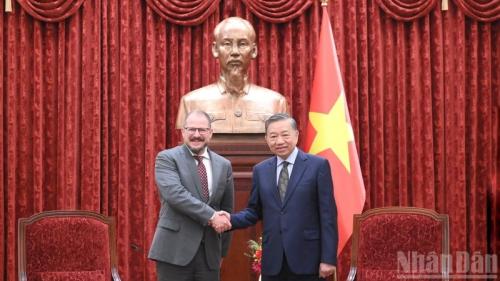
The Vietnamese top leader made the request while receiving Mr. Cristiano Amon, President and CEO of Qualcomm, on August 27 during his working visit to Vietnam.

General Secretary and President Lam emphasized that Vietnam prioritizes attracting investments that are coupled with technology transfer and the development of high-quality human resources. He reaffirmed that Vietnam will continue to create favorable conditions for leading global technology corporations, particularly those from the United States, to invest, research, and establish long-term partnerships in the country.

Acknowledging Qualcomm’s contributions over the past 20 years, the leader highly valued the Group’s expansion of its research and development (R&D) activities and its support for innovation and the growth of Vietnam’s technology ecosystem. He specifically noted the establishment of Qualcomm’s R&D center in Hanoi and its successful collaborations with major Vietnamese tech firms such as Viettel and VinSmart.

Mr. Lam welcomed Qualcomm’s strategy to position Vietnam as a high-priority location in its Asian development plan, moving toward making the country a vital R&D hub within its global network. He noted that this direction is perfectly aligned with the strengthening of cooperation in science, technology, and innovation under the Vietnam-US Comprehensive Strategic Partnership.

Furthermore, he urged Qualcomm to increase technology transfer, share management expertise, and expand cooperation with domestic enterprises, universities, and research institutes. These efforts, he noted, should focus on helping Vietnamese businesses enhance their technological capabilities and participate more deeply in global technology value chains and supply chains.

Vietnam as its third-largest AI R&D global hub

For his part, Mr. Amon stated that his visit comes at a time when Qualcomm is accelerating its strategy to develop emerging technologies, particularly AI, semiconductors, and connected computing, while simultaneously expanding its R&D footprint in Vietnam.

The Qualcomm leader highly commended Vietnam’s vision, determination, and robust policies aimed at driving growth, science and technology development, innovation, digital transformation, and the semiconductor and AI industries.

Expressing his impression of Vietnam’s recent developmental milestones, Mr. Amon remarked that these achievements demonstrate the country's growing appeal to the international business community. He added that this progress provides a solid foundation for Vietnam to emerge as an increasingly vital regional hub for high-tech manufacturing, R&D, innovation, and the digital economy.

Notably, Mr. Amon affirmed that Qualcomm regards Vietnam as an increasingly important market and technology hub in Asia. He revealed that the Group aims to establish Vietnam as its third-largest AI research and development hub globally.

With over $100 billion already invested in R&D worldwide, Qualcomm seeks to leverage its core technological capabilities, global research network, and international partner ecosystem to expand cooperation in Vietnam. Key focus areas include AI, semiconductors, 5G/6G, connected computing, and next-generation technological infrastructure.

Qualcomm also expressed its desire to strengthen coordination with Vietnamese government agencies, enterprises, research institutes, and universities. This collaboration will focus on research, high-quality human resource training, technology transfer, and the development of next-generation technologies. The Group remains committed to expanding its investment and long-term presence in Vietnam, contributing to the nation's burgeoning semiconductor, AI, and innovation ecosystems.


Mooncake orders double ahead of Vietnam's Mid-Autumn Festival

Mooncake orders double ahead of Vietnam's Mid-Autumn Festival

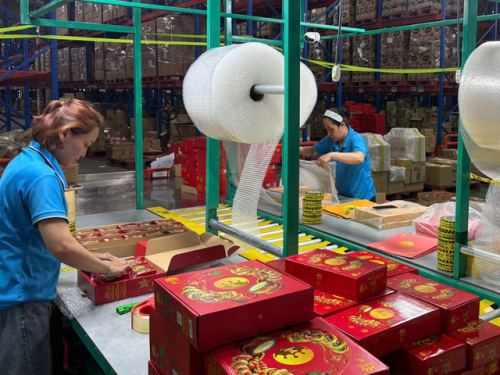
Mooncake orders on Shopee doubled in the two months before this year's Mid-Autumn Festival, while orders for other festival-related products rose nearly 50 percent year on year, pointing to an early start to seasonal shopping in Vietnam.

Vietnam's Mid-Autumn Festival, known locally as Tet Trung Thu, is a traditional festival held on the 15th day of the eighth month of the lunar calendar, usually falling in September or early October.

The festival is associated with family gatherings, children carrying lanterns and lion dances, while mooncakes are traditionally eaten and given as gifts to relatives, friends, and business partners.

Although the festival falls in late September this year, consumers have already begun shopping for mooncakes, lanterns, gift boxes, and other seasonal products.

According to internal data from Shopee, Mid-Autumn-related products recorded nearly one million searches in August.

Mooncakes were the most searched item, followed by lanterns, gift boxes, and baking supplies.

The strong interest has translated into higher sales, with orders for Mid-Autumn-festival-related products rising nearly 50 percent from the same period last year.

Mooncake orders alone doubled in the two months leading up to this year's festival compared with the same period in 2025.

The figures show that consumers are preparing for the festival earlier and looking for more options, ranging from traditional mooncakes and gifts to decorations.

Brands including Mondelez Kinh Do and Lam Thuy said consumers are increasingly concerned about product quality and the overall value they receive.

As a result, brands are paying greater attention to how they present products online and how quickly they respond to changing consumer demand.

Lam Thuy turns to live streams, videos

Lam Thuy, a traditional mooncake brand that has expanded its e-commerce business in recent years, has been using Shopee's digital content tools to reach more customers.

Through live streams, the brand can showcase the appearance and characteristics of different mooncakes while answering customers' questions in real time.

Shopee Video also allows the brand to provide product information in different formats and direct users to its online store.

Ngo Thi Thuy Linh, brand director of Lam Thuy, said the company develops new mooncake designs every year to match changing tastes and attract younger consumers.

Videos and live streams are useful for introducing new products and reaching shoppers looking for new choices for the Mid-Autumn Festival, she said.

Lam Thuy has also worked with Shopee to launch promotional programs since early August.

The brand plans to increase live-streaming and promote its key products during the September 9 sales event.

To prepare for higher demand, Lam Thuy has tripled the number of workers involved in production, packaging, and customer service.

It expects mooncake orders on Shopee during this year's Mid-Autumn season to increase around 20 percent from last year.

Kinh Do uses data to adjust product range

For Mondelez Kinh Do, which already has a large-scale e-commerce operation, data analysis is being used to adjust its product range, content, inventory, and resources.

Duong Uy Trong Phuc, e-commerce channel manager at Kinh Do, said the mooncake business has a short selling season, while consumer preferences for flavors, designs, and gifting purposes can change quickly.

The company therefore needs to prepare its product range early while continuously monitoring market demand, he said.

Analytics tools help Kinh Do identify products attracting consumer attention, while customer feedback and interactions through digital content provide additional insight into their preferences.

The company has introduced several new products this year, including Mini Lava and Snowy Mooncakes, as well as the four-mooncake 'Ma Dao Doan Vien' gift box and the two-mooncake 'Trang Slay' box.

The new products are aimed at offering more choices and attracting younger consumers.

Kinh Do also plans to increase activities on Shopee Live and Shopee Video during the September 9 sales event.

The experiences of Lam Thuy and Kinh Do show how brands are using e-commerce differently.

However, both brands are moving to identify consumer demand earlier and prepare their products and sales strategies ahead of the peak Mid-Autumn shopping season.

Vietnam’s data centre race draws multibillion-dollar investment

Vietnam’s data centre race draws multibillion-dollar investment

Ho Chi Minh City currently has 20 operational data centres and nine proposed projects, according to the municipal Department of Science and Technology. New projects are moving beyond traditional data centres toward large complexes integrating AI and other digital infrastructure.

Hanoi (VNA)– Vietnam’s data centre market is entering a new phase as a wave of large-scale projects worth billions of US dollars is being proposed and rolled out, driven by rising demand for artificial intelligence (AI), cloud computing and large-scale data processing.

Ho Chi Minh City currently has 20 operational data centres and nine proposed projects, according to the municipal Department of Science and Technology. New projects are moving beyond traditional data centres toward large complexes integrating AI and other digital infrastructure.

Among the most notable is the SGI-HCM Campus data centre and AI complex at Tan Phu Trung Industrial Park, invested in by Kinh Bac City Development Holding Corporation (KBC) in partnership with Accelerated Infrastructure Capital (AIC) and VietinBank. The project has an estimated investment of about 2.1 billion USD and received its investment registration certificate on July 21.

Another major proposal is a 2-billion-USD AI super data centre by UAE-based G42, Microsoft, FPT Corporation, Viet Thai Group and VinaCapital. The project is expected to contribute to economic growth and strengthen Vietnam’s appeal to foreign investors.

In late July, Ho Chi Minh City authorities and an inter-agency working group met with G42, Microsoft and other investors to discuss the Trusted Data Agreement and related legal issues. Investors are continuing to refine the project and study potential locations.

Several other large projects are also being carried out or proposed at the Saigon Hi-Tech Park, including those involving BW Industrial Development, Warburg Pincus and Digital Realty; Sembcorp-BB Holding; NTT Global Data Centers; and CMC Corporation. Their investment values range from 250 million USD to 850 million USD.

The surge comes as demand for data infrastructure grows rapidly. Savills Vietnam forecasts that the country’s data center capacity could reach around 950 MW by 2030, up from about 524.7 MW in 2025. Market revenue is projected to exceed 3 billion USD by 2031, with annual growth of more than 20%.

John Campbell, Director of Industrial Services at Savills Vietnam, said Vietnam was at the beginning of a significant data centre development cycle. He noted that demand had existed for years, supported by the country’s young population, high technology adoption and rapid digitalisation.

Large cloud service providers have also been showing interest in Vietnam for the past four to five years, indicating that demand is not new but that the market is becoming increasingly ready for faster growth.

Regulatory changes are providing additional momentum. Since 2025, foreign investors have been allowed to own 100% of companies providing data centre services, removing one of the barriers that previously limited international investment in the sector.

The race is about more than land

Unlike conventional industrial real estate, where land, location and infrastructure access are key considerations, data centres require a much more complex combination of conditions.

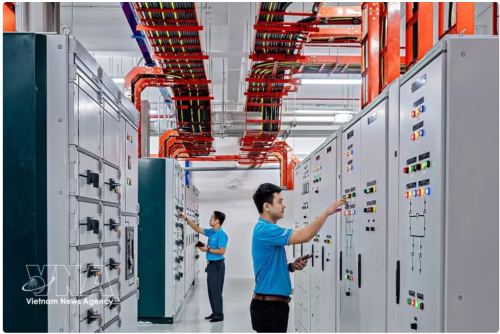
Power supply is the most critical factor. Large data centres consume huge amounts of electricity and require a stable, uninterrupted supply, with sufficient backup capacity and an increasing focus on clean energy.

Andrew Green, Head of Data Centre Group, Asia Pacific at Cushman & Wakefield, said data centre development was shifting from locations with good connectivity to markets capable of supplying electricity on a large scale. This trend is creating new growth corridors and pushing investment beyond traditional data centre hubs.

Data connectivity is another essential factor. Large data centres need reliable international Internet connections, particularly submarine cables and stable landing stations. As cloud computing, AI and cross-border data services expand, connectivity is becoming an increasingly important part of a data centre’s value.

This is encouraging projects to cluster around areas where different layers of infrastructure converge, including hi-tech and industrial parks, logistics hubs and major cities.

Data regulations and information security are also becoming increasingly important. According to Savills, tighter personal data protection rules are likely to encourage businesses to store and process more data in Vietnam, increasing demand for facilities that meet international standards.

For banks, financial institutions and government agencies, requirements are even higher, with data centres needing advanced information security standards. As a result, the value of a data centre cannot be measured simply by land area or power capacity, but also by its security, reliability and operating standards.

Savills Vietnam said improvements in the legal framework and progress in resolving land, approval and project implementation issues at hi-tech parks were creating tangible changes in the market.

From a real estate perspective, data centers are emerging as a distinct segment from factories and logistics warehouses. They require large capital investment, lengthy preparation and strict technical assessments. Land leases of 10-30 years are becoming common as investors seek long-term stability for assets with long operating lives.

This is also creating opportunities for industrial property developers. Rather than simply providing land, developers need to offer integrated infrastructure covering electricity, connectivity, security, cooling, telecommunications and long-term capacity expansion.

See all blog