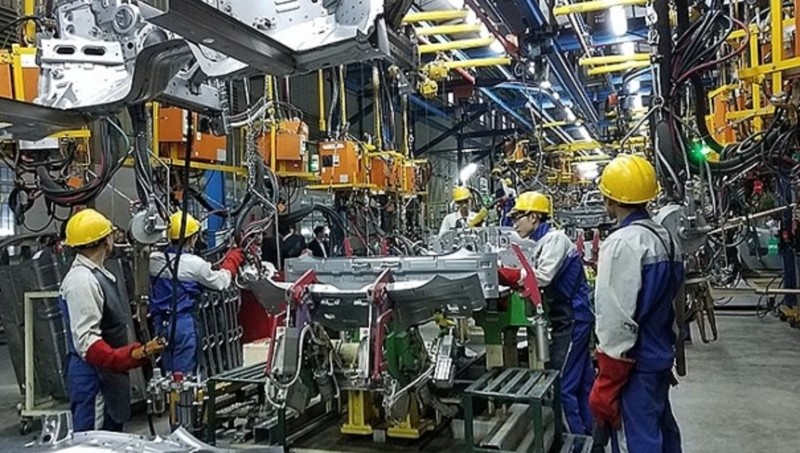
A strategic shift in Vietnam’s foreign investment policy
Politburo Resolution No. 10 marks a strategic shift in Vietnam’s foreign investment policy, moving beyond mere FDI attraction toward the development of a national investment platform.
Almost seven years ago, on August 20, 2019, the Politburo issued Resolution No. 50-NQ/TW on improving institutions and policies to enhance the quality and effectiveness of FDI cooperation through 2030. The Resolution called for the proactive and selective attraction of FDI, with quality, efficiency, technology, and environmental protection as the primary evaluation criteria. It marked a new direction in the attraction, utilization, and management of high-quality FDI in Vietnam.
Politburo Resolution No. 10-NQ/TW, on developing the foreign-invested economic sector, issued on June 8, 2026, builds on that foundation while reflecting Vietnam’s changing development realities. It marks a decisive shift from an FDI attraction mindset to one focused on building a national strategic investment platform. The emphasis has moved from competing for investment based on administrative boundaries to attracting investment through industrial clusters, value chains, and innovation ecosystems. Quality, efficiency, technology transfer, supply chain participation, and value creation have become the key criteria, while policy support is gradually shifting from input-based incentives, such as tax breaks and land rental preferences, to performance-based incentives tied to investment commitments.
New national context
Vietnam’s large-scale administrative restructuring last year, reducing the number of provinces and centrally-governed cities from 63 to 34 and establishing a two-tier government system, represents a transformative reform effort. These changes play a critical role in reshaping the investment environment and creating new momentum for economic growth.
The FDI landscape is expected to benefit significantly from the elimination of fragmented local interests. Larger provincial units with stronger economic capacity can support integrated transportation and logistics networks instead of the fragmented development model of the past. Compliance costs associated with investment, construction, and environmental procedures are being streamlined. Licensing processes for industrial park projects are expected to become considerably faster, reducing both opportunity cost and waiting times for foreign investors. Expanded planning space also enables the formation of seamless supply chains, making it easier for multinational corporations to secure land and establish integrated industrial ecosystems.
The administrative restructuring has also streamlined government operations and optimized resource allocation. The reduction in provincial-level administrative units and the elimination of district-level authorities are expected to save trillions of VND in budget expenditures. These resources can then be redirected toward critical infrastructure development, including airports, seaports, expressways, healthcare facilities, and education systems that improve workforce skills to support FDI activities.
The new two-tier governance model, consisting of provincial and commune-level authorities, eliminates intermediate administrative layers. At the same time, stronger decentralization empowers local governments to address bottlenecks related to land acquisition, site clearance, electricity and water supply, internet services, wastewater treatment, and waste management more efficiently, particularly in industrial parks and standalone investment projects. This helps unlock local resources and improve project implementation.
Raising R&D spending
Politburo Resolution No. 10 positions the FDI sector as a critical link in Vietnam’s ambition to become a regional innovation and operations hub.
Global experience demonstrates that countries with higher R&D expenditure as a share of GDP tend to achieve faster and more sustainable advances in economic development as well as science, technology, and innovation. According to the United Nations Conference on Trade and Development (UNCTAD), Israel and South Korea lead the world in this regard, with R&D spending accounting for 6.3 per cent and 5.0 per cent of GDP, respectively.
Most of this investment comes from private enterprises, including foreign-invested enterprises (FIEs) and high-tech companies. Other economies with high R&D intensity include Taiwan (China), with 3.8 per cent of GDP, the US with 3.5 per cent, Japan with 3.4 per cent, Switzerland with 3.35 per cent, China with around 2.68 per cent, Singapore with approximately 2.0 per cent, and Thailand with 1.2 per cent. Vietnam’s ratio remains comparatively low, at roughly 0.4-0.53 per cent of GDP, ranking it 66th globally.
To achieve a breakthrough and avoid the middle-income trap, Vietnam should aim to raise R&D spending to at least 2 per cent of GDP, comparable to Singapore’s current level, in the years ahead. Politburo Resolution No. 10 introduces several breakthrough mechanisms to directly and indirectly do so.
First, it prioritizes investment in core technologies. Vietnam will focus on attracting investors that possess foundational and source technologies, particularly in semiconductors, AI, and big data. These investors may include both large corporations and specialized small and medium-sized enterprises (SMEs) that possess unique technological capabilities and strong R&D capacity, enabling them to maintain competitiveness and integrate deeply into global value chains.
Second, the Resolution promotes the development of a global talent ecosystem. Administrative procedures should be simplified and accelerated, visa and residency requirements eased, and work permit regulations reviewed and reduced for high-tech experts, scientists, foreign entrepreneurs, and overseas Vietnamese with relevant qualifications, regardless of whether they retain Vietnamese citizenship.
Third, the Resolution seeks to strengthen technology transfer and domestic-foreign business links. A national supplier development program should be introduced to encourage Vietnamese enterprises to establish partnerships, joint ventures, and collaborations that enhance their ability to absorb technology from FIEs. This, in turn, would improve the R&D capabilities of the domestic private sector.
Reforming investment promotion
Politburo Resolution No. 10 marks a major shift from a passive approach that waits for investors to arrive to a proactive strategy focused on cultivating, partnering with, and attracting strategic investors, often referred to as “eagles.”
This transformation is reflected in several key directions.
From broad promotion to targeted engagement: Mass investment promotion campaigns are being replaced by focused outreach, negotiation, and relationship-building with leading multinational corporations, major financial institutions, and large investment funds.
Data-driven investment promotion: The Resolution calls for the development of a comprehensive digital database of strategic investors and customized engagement strategies tailored to specific markets, countries, territories, and industry segments.
Strengthening on-site investment promotion: Greater emphasis is placed on supporting existing investors, resolving operational challenges, and encouraging high-quality expansion projects. Rather than repatriating profits after meeting tax obligations, investors are encouraged to reinvest earnings in Vietnam. This is regarded as one of the most effective ways to build confidence among global investors.
Establishing a dedicated Investment Promotion Agency (IPA): Following the enactment of the Law on Foreign Investment in 1987, the government established the State Committee for Cooperation and Investment (SCCI) in 1989 to manage and attract FDI.
However, after nearly four decades of attracting, managing, and utilizing foreign investment, Vietnam still lacks a true national investment promotion agency that meets international standards. Investment promotion activities have largely been carried out through Investment Promotion Centers (IPCs) under the former Ministry of Planning and Investment, now the Ministry of Finance, and various local agencies that often combine investment promotion with trade and tourism activities.
Under the government’s recent institutional restructuring, the Foreign Investment Agency (FIA) and related investment management functions were transferred from the Ministry of Planning and Investment to the Ministry of Finance. As of 2026, the Ministry of Finance is responsible for developing, approving, and coordinating the National Investment Promotion Program.
The experience of Malaysia and Thailand, widely regarded as ASEAN’s most successful investment promotion models, demonstrates the value of a single national agency with strong authority and a business-oriented philosophy.
Malaysia’s investment promotion system is centered on the Malaysian Investment Development Authority (MIDA), established in 1987 under the Ministry of Investment, Trade and Industry. MIDA serves as the primary point of contact for investors and has authority over investment applications, approvals, and tax incentives.
Thailand’s Board of Investment (BOI), meanwhile, operates under the Office of the Prime Minister, with the Prime Minister serving as its Chair. This gives the BOI substantial authority to overcome bureaucratic obstacles and coordinate effectively across ministries and local governments.
Against this backdrop, establishing a dedicated national IPA that operates independently and according to international standards is increasingly necessary for Vietnam. Such an agency would eliminate fragmentation between the Ministry of Finance and local authorities, serving as a single focal point for national investment attraction strategies during Vietnam’s next phase of development.
It would also professionalize investment marketing efforts, build teams of highly-skilled negotiators and market specialists, and target investors and projects that align with Vietnam’s development priorities. It could also coordinate solutions to issues in land clearance, tax incentives, investor disputes, industrial parks, free trade zones, and local authorities.
Defining roles
Politburo Resolution No. 10 redefines the relationship between different levels of government by assigning the central government responsibility for institutional design and digital governance while local governments focus on implementation. This framework applies across all FDI activities, including research, manufacturing, and services.
At the national level, authorities must strengthen efforts to combat transfer pricing, trade fraud, and environmental violations while withdrawing incentives from projects that fail to meet commitments on technology transfer, product standards, or environmental protection.
Local governments, meanwhile, should transition from a purely administrative role to that of a strategic partner for investors. Their responsibilities include licensing support, site clearance, infrastructure preparation, utility provision, environmental services, and workforce development to ensure investor needs are met efficiently.
Proactive local governance may take the form of “green lane” mechanisms, similar to expedited customs clearance channels, enabling major investment projects to obtain approvals within as little as 48 hours. Local authorities should also promote regional connectivity and facilitate the integration of domestic enterprises into the production and service networks of FIEs operating in their jurisdictions.
With the implementation of Politburo Resolution No. 10, attracting $200-$300 billion in registered foreign investment and disbursing $150-$200 billion in capital, equivalent to roughly $30-40 billion annually, appears both realistic and achievable during Vietnam’s next development phase from 2026 to 2030.
(*) Mr. Le Huu Quang Huy is Vice President of the Vietnam Industrial Park Finance Association, former Director of the Investment Promotion Center for Central Vietnam, and former Economic Counselor at the Embassy of Vietnam in Japan.
Source: Le Huu Quang Huy